
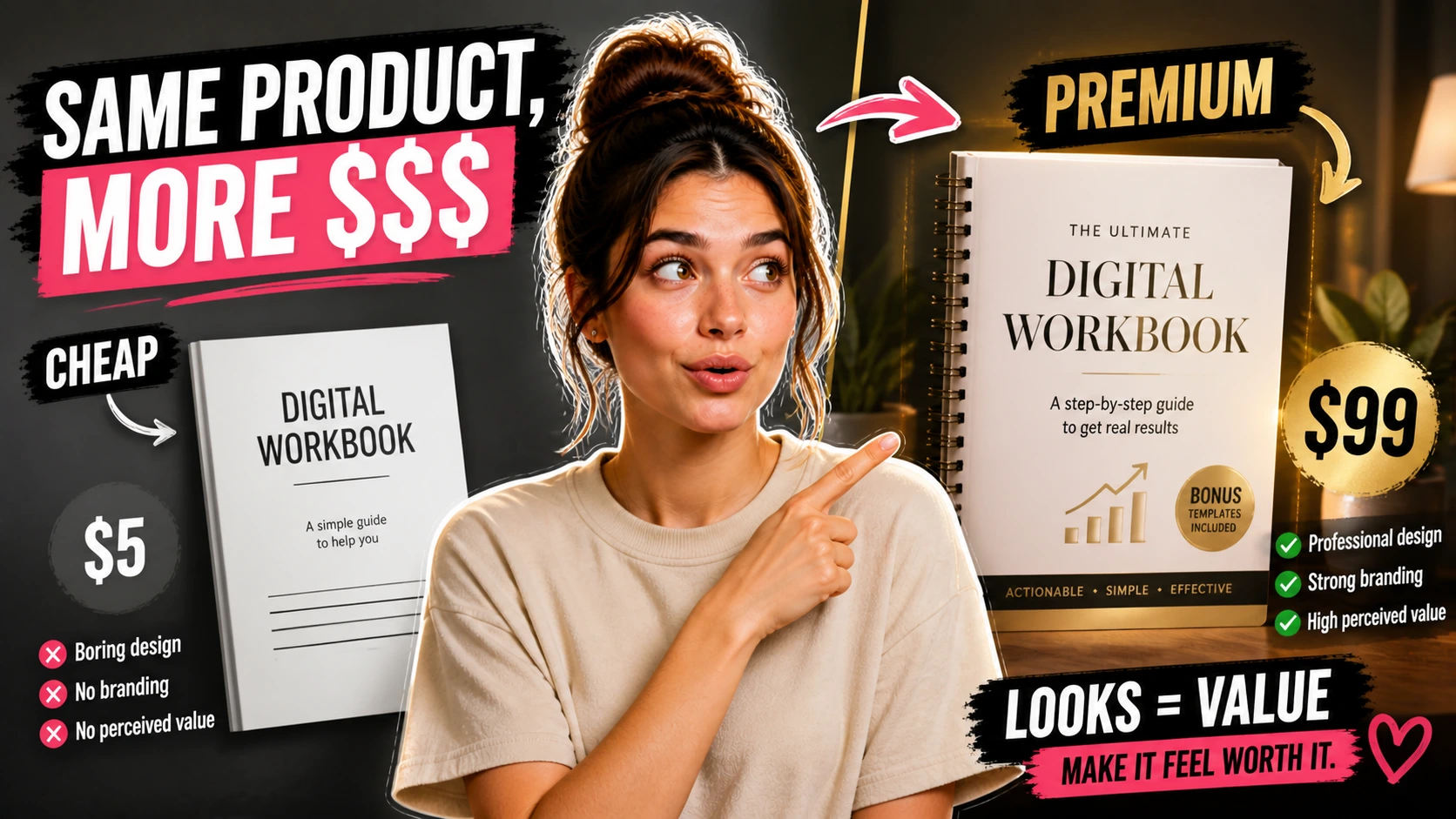
How to Make Your Digital Product Feel Worth Paying For
A digital product can be technically finished and still feel a little flat the moment someone opens it. The files are there, the cover exists, the pages are exported, but the whole thing still gives the sense that something important never clicked into place.
That missing piece is not always more content.
A product can be complete and still not feel worth paying for if the value is fuzzy, the experience is awkward, or the presentation feels rushed in ways the buyer notices right away. A workbook with twenty pages can still feel thin if the prompts drift and never lead anywhere useful. A template pack with fifteen files can still feel weak if half of them are repetitive, unclear, or harder to use than they should be.
That is why effort alone does not create value in the buyer’s mind.
Finished Is Not the Same as Valuable
A finished product is one that exists in a deliverable form. A valuable product is one that helps the buyer do something, understand something, save time, reduce friction, or get a better result without feeling lost along the way.
That sounds obvious.
But it changes how you look at your work. Instead of asking, “Did I make enough pages?” you start asking, “Does this feel easy to understand, easy to use, and clearly worth this person’s money?” Those are very different questions. One is about output, and the other is about buyer experience.
A lot of products feel weak not because the core idea is bad.
A lot of products feel weak because the value gets buried under vague naming, cluttered structure, unclear instructions, or filler that makes the product feel less focused instead of more generous. People can sense that almost immediately, even if they cannot explain it neatly.
What Buyers Notice First
Most buyers are not grading your product with a spreadsheet. They are making a quick judgment based on what they see, how quickly they understand it, and whether it feels like it was made for a real situation instead of thrown together in a rush.
That is why a small product can feel stronger than a big one.
If the title is specific, the promise is clear, the format is clean, and the next step is obvious, the product starts to feel trustworthy before the buyer even uses all of it. Trust is a quiet part of value. It shows up when the product looks intentional and when the seller seems to understand the problem the buyer actually has. A checklist called “Daily Business Success System” feels fuzzy.
A checklist called “Weekly Client Follow-Up Checklist for Freelancers Who Forget to Reconnect” feels more grounded.
Specificity does not make a product smaller. It usually makes it feel more worth paying for.
Bigger Is Often Just Noisier
When creators worry that a product feels too basic, the first instinct is often to add more. More pages, more bonuses, more prompts, more templates, more sections, more everything.
Sometimes that helps.
But often it just creates bulk. Bulk is not the same as value. A swipe file with fifty examples is not automatically stronger than one with twenty.
If the categories are messy, the examples feel generic, and the buyer has no idea which ones fit their situation, the larger file may actually feel cheaper because it creates more sorting work for the person who bought it.
The same thing happens with template packs. A tighter pack with six strong, well-labeled templates can feel much more useful than a bigger folder full of uneven files that make the buyer do the editing, organizing, and decision-making you should have done first.
Clarity Raises Value Fast
A product often becomes more valuable when the buyer understands exactly what it is, who it is for, and how to use it within the first minute. That is not a marketing trick.
That is part of the product itself.
Clarity can come from a better title, a sharper subtitle, cleaner section labels, a short welcome page, or simple instructions that tell the buyer what to do first. It can also come from removing language that sounds polished but says almost nothing. This is one place where AI can help quite a bit.
ChatGPT, Claude, or Gemini can rewrite fuzzy descriptions, tighten section headings, suggest clearer product names, and turn vague instructions into steps that feel easier to follow.
But you still have to judge whether the clearer wording is actually more useful. AI is very good at making language sound smoother, and not always as good at making the product itself easier to use.
Examples Make the Product Feel Real
One of the easiest ways to make a digital product feel more worth paying for is to include realistic examples. Not too many, and not decorative ones, but examples that help the buyer see what good use of the product looks like.
A workbook prompt can feel abstract on its own.
Add a short example answer or a before-and-after illustration, and suddenly the page feels less like homework and more like guidance. A checklist can feel obvious until you add a note showing when someone would use it or what a completed step actually looks like. A swipe file gets stronger when the entries are grouped by purpose and each section includes a sentence or two about when to use those examples and when not to.
That is practical value.
The buyer is no longer staring at a blank page wondering whether they are doing it right.
Better Sequencing Makes Basic Feel Stronger
Sometimes a product feels weak because the pieces are in the wrong order. The content may be fine, but the flow makes the whole thing feel harder than it needs to be.
A checklist becomes more useful when the steps follow the natural order of the task.
A workbook improves when the early prompts create enough clarity for the later ones to matter. A template pack feels more premium when the buyer can tell which file to open first instead of guessing. This kind of improvement does not require more content.
That is good news, because sequencing is often easier to fix than creating a whole new product.
You can print the pages, lay them out, and ask a very simple question: if I were the buyer, would this order help me move forward, or would it make me stop and think too hard too soon? Products often feel more valuable the moment the path through them gets easier.
Cut What Weakens the Set
There is a point where adding value looks less like adding and more like editing. Some products get better when you cut the weakest twenty percent.
This is especially true for template packs, prompt libraries, and swipe files.
One weak file can make the whole set feel less curated, and several weak files can make the buyer wonder whether the strong ones were included by accident. A pack of email templates feels more worth paying for when every template earns its place. A printable bundle feels better when the pages match each other in tone, design, and usefulness.
A short ebook feels sharper when the rambling section gets removed instead of stretched into a chapter just to make the page count look bigger.
That editing work matters because buyers often judge quality by consistency. If the product feels uneven, they trust it less.
Presentation Should Support Use
Clean presentation can absolutely increase value, but only when it helps the product feel easier to use, easier to trust, or easier to understand. Fancy design on top of a confusing product usually makes the mismatch more obvious.
A clean cover, readable formatting, consistent spacing, simple typography, and tidy file naming can make a basic product feel much more solid.
So can preview pages that show the product honestly instead of trying to hide what is inside behind mockups and decorative fluff. Canva, Google Docs, Notion, and PDF tools can help you improve that layer without turning the project into a design marathon. You do not need a luxury-brand aesthetic.
You need a product that looks intentional.
When the formatting is consistent and the presentation matches the purpose, the buyer relaxes a little because it feels like someone paid attention to the details that affect real use.
Packaging Shapes the Value Too
Value does not only come from what is inside the file. It also comes from packaging, positioning, and the sense that the product solves a specific problem for a specific person.
A checklist feels stronger when it is framed as a tool for a real use case instead of a vague productivity download.
A workbook feels more worth paying for when the title and subtitle make the outcome feel concrete. A bundle feels more useful when the included pieces clearly support one another instead of sitting together for no real reason. This is why a product page matters too.
On Gumroad, Etsy, Amazon KDP, or your own site, the buyer is partly deciding whether the product feels worth paying for before purchase by reading how it is described.
That description should reduce uncertainty, not create more of it. What is included, who it is for, what it helps with, and what kind of result or experience the buyer should expect all need to be plain enough that the buyer does not have to translate your product into usefulness on their own.
Use AI to Strengthen, Not Decorate
AI is genuinely useful for polishing the parts of a product that are still vague, repetitive, or rough around the edges. It can help rewrite instructions, create example outputs, improve product descriptions, reorganize sections, suggest titles, and point out places where the flow feels thin.
It can also help you compare versions quickly.
You can ask it to identify repetitive prompts, weak headings, or sections that sound polished but do not add anything practical. That speed can be a relief, especially when you know the product is close but cannot quite see what is wrong anymore. Sometimes an AI pass helps you notice that the issue is not the idea itself.
It is that the product still assumes too much, explains too little, or makes the buyer work too hard.
But AI also has a habit of decorating weak material instead of strengthening it. It can make a bland prompt sound smoother, or turn a vague title into a more elegant vague title.
Check It Like a Buyer Would
Before you try to charge more, look at the product like a buyer who has never seen it before. Not like the person who made it, and not like someone who knows what you meant.
Can they tell what it is quickly?
Do they know what to do first. Does the product feel designed for a real situation. Are the examples believable. Is anything included just because you were afraid the product looked too short without it.
Those questions usually reveal more than another round of random additions.
They show whether the product feels clear, relevant, and easy to trust. A digital product does not need to be huge to feel worth paying for. It needs to feel intentional.
When the buyer can see the point, use it without friction, and sense that the useful parts were chosen on purpose, even a modest product can stop feeling basic and start feeling like something they are genuinely glad they bought.
