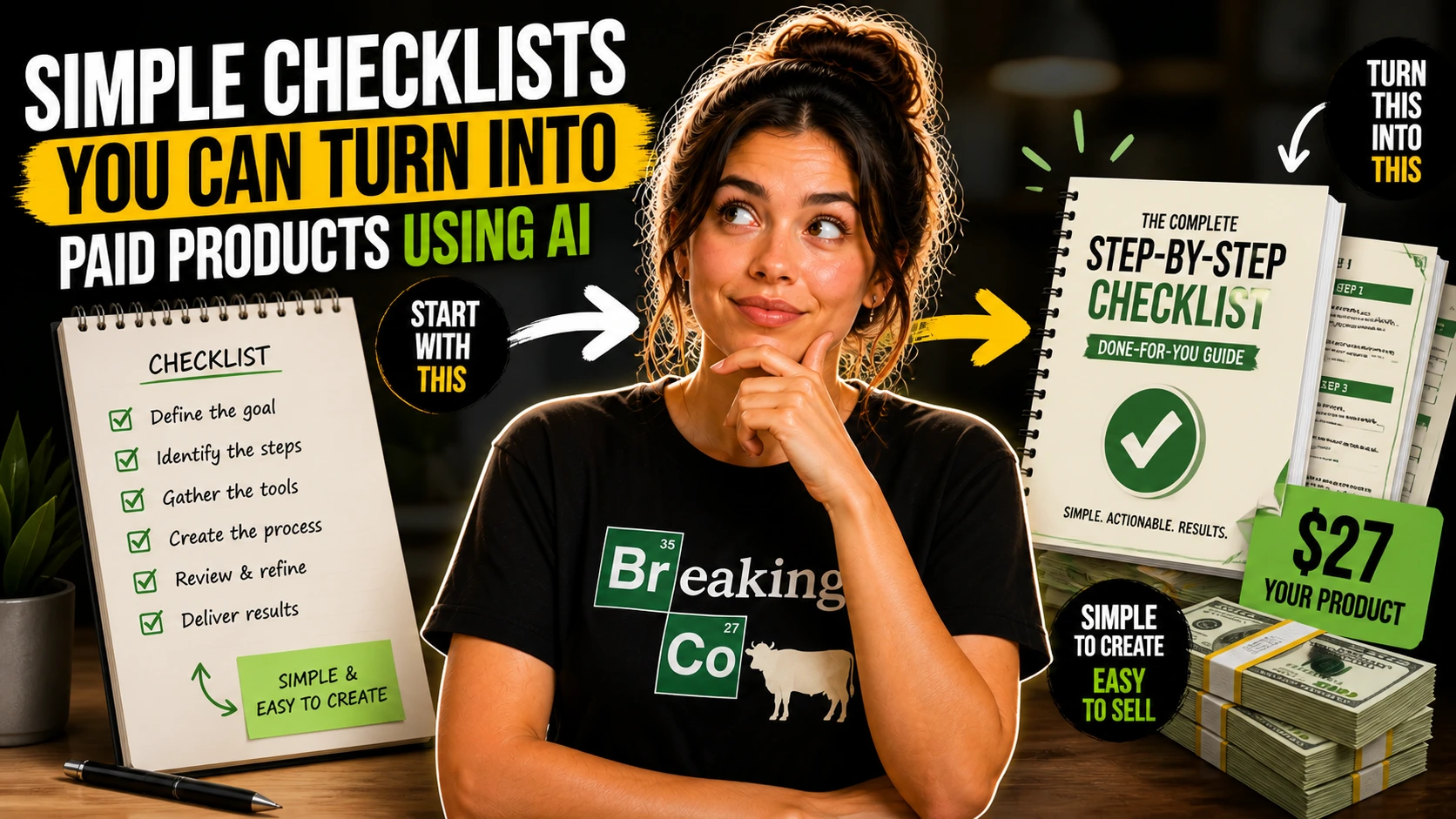
Simple Checklists You Can Turn into Paid Products Using AI
The first checklist I tried to turn into a product looked tidy, but it was mostly a list of obvious reminders. It had lines like “set your goal,” “make a plan,” and “review your progress.”
That all sounded reasonable until I pictured someone paying for it.
That was when the real lesson landed for me. A checklist is not useful just because it exists. It becomes useful when it helps a specific person finish a specific task with less stress, fewer mistakes, and less doubling back.
What makes a checklist worth buying
That’s what makes checklists such an overlooked first digital product.
They seem simple, so people brush them off. But simple is often exactly what someone wants when they’re halfway through something and already mentally tired.
That’s also where AI can help without doing the whole job for you. It can help you pull together rough steps, suggest a better order, clean up the wording, and package the final version faster. But you still have to notice what’s fuzzy, what’s missing, and what a real person would actually need at that moment.
People usually don’t pay for a checklist because it’s long.
They pay for it because it helps them avoid missing something important, forgetting a step, or wasting an hour figuring out what comes next. Think about a renter trying to get a deposit back, or a freelancer onboarding a new client, or a coach setting up their first course portal.
The value in those cases is not entertainment or inspiration. It’s relief. A good checklist lowers decision fatigue. It takes a messy process and turns it into a sequence someone can follow with confidence.
When that sequence is solid, it feels like borrowing someone else’s clear head for ten minutes.
That’s why low-priced checklist products can work so well. A person may not want a full course, and they may not need a giant template bundle.
Freebie feel versus paid usefulness
A freebie-style checklist is usually broad, light, and pleasant. It may work well for email signups, but it often stays at the level of “remember to prepare” instead of telling someone what to prepare, when to do it, and what to watch out for.
A paid checklist needs more substance than that.
It should be specific enough that the buyer immediately thinks, “Yes, this is exactly what I’m trying to do.” So instead of “Podcast Launch Checklist,” a stronger product might be “Solo Podcast Launch Checklist for First-Time Coaches.”
Instead of “Client Onboarding Checklist,” it could become “New Client Onboarding Checklist for Freelance Designers Using Notion and Google Drive.” That kind of specificity is what makes a checklist feel useful instead of generic. Most buyers are not paying for length.
They’re paying for clarity, structure, and the feeling that someone has already worked through the messy parts.
The niche does more work than the design
Broad checklists are usually weaker because they try to help everyone and end up not guiding anyone especially well. “Weekly reset checklist” sounds pleasant, but “weekly reset checklist for ADHD households with kids” gives you a much clearer sense of what the list actually needs to cover.
This is where beginners can get traction faster than they expect.
You don’t need to be famous or seen as a top expert. You just need to understand a task well enough to make it easier for a certain kind of person. If you’ve ever repeated the same steps for clients, your household, your admin work, your content process, or your service delivery, there may already be a product in that repetition.
A lot of strong checklist ideas come from things people keep asking about, or from moments when someone says, “Can you just send me the steps you use?”
It’s easy to picture practical examples. A move-out checklist for renters, a course setup checklist for coaches, a shop opening checklist for Etsy sellers, or a new client onboarding checklist for freelance copywriters can all work as paid products if they’re genuinely useful and tightly scoped.
Where AI helps, and where it gets in the way
AI is very good at giving you a quick starting point. You can ask ChatGPT, Claude, or Gemini to map out the sequence for a podcast launch, draft missing sub-steps, sort actions into phases, rewrite awkward items, or create versions for different niches.
That can save a surprising amount of time in the early draft stage.
Instead of staring at a blank Google Doc or Notion page, you have something to react to, edit, and pressure-test. But AI also tends to pad things out. It often adds filler steps, repeats the same idea with slightly different wording, or puts tasks in an order that sounds reasonable on paper but feels off in real life.
That’s where your judgment matters.
You have to cut the vague steps, fix the order, notice dependencies, and ask whether someone could actually follow this while busy, stressed, or distracted.
What a strong first version looks like
Your first checklist product does not need to be big. In most cases, it’s better if it isn’t.
A solid first version might be a 2 to 5 page PDF with one main checklist, a few short notes under the trickier steps, and a clear title that tells the buyer exactly who it’s for.
You might also include an editable Google Doc version, a printable version, or a Notion copy if that format fits the task. Let’s say you’re making a “New Client Onboarding Checklist for Freelance Designers.”
The paid version might include a pre-project checklist, a kickoff call prep list, a file handoff checklist, and a short section called “easy-to-miss details” with reminders about file naming, revision limits, and confirming payment timing. That feels a lot more useful than a single page of generic bullet points. It’s still simple, but it carries some real experience behind it.
And that’s often what makes someone comfortable paying a modest amount.
Packaging changes how the product feels
People often say they’re selling a checklist, but what they’re really selling is a finished tool. A rough text document can still help, but a cleaner format makes it easier to trust, easier to use, and easier to return to later.
You don’t need advanced design skills for this.
A simple layout in Canva, Google Docs, Notion, or a basic PDF editor can be enough if the spacing is clean, the sections are clearly labeled, and the structure makes sense at a glance. Sometimes packaging adds value without adding much extra work.
A checklist paired with a printable version, an editable version, and a one-page “common mistakes” companion can feel much more complete than a plain file.
This is another place where AI can help. It can draft product descriptions, suggest better section names, help you write a subtitle that makes the use case clear, and create alternate versions for nearby audiences without forcing you to rebuild everything from scratch.
Day 1, Week 1, Month 1
On Day 1, spend one to two hours choosing a narrow task and a specific buyer. Then spend another one to two hours using AI to brainstorm steps, compare the draft against your own experience, and remove anything that feels generic or unnecessary.
By the end of that first day, you want a rough checklist in plain text.
Not designed, not polished, just usable enough that you could hand it to one real person and ask, “Would this actually help you finish the task?” In Week 1, spend three to five hours refining the order, testing it on yourself or someone you trust, and packaging it into a simple product.
That might mean formatting it in Canva or Google Docs, exporting a PDF, writing a short sales page for Gumroad or Etsy, and making one clear preview image. This is also the week when friction starts to show up.
If a test reader gets stuck on step four, skips step seven, or says two items feel like the same thing, that matters more than whether your font pairing looks polished.
By Month 1, you’re not trying to build a huge product line. You’re paying attention to what people respond to, improving the checklist based on actual use, and maybe creating one variation or mini bundle once the first version feels genuinely helpful.
That might mean a renter checklist turns into a move-out mini pack with a cleaning checklist and a utility shutoff list. Or a freelancer onboarding checklist grows into a small client setup bundle with a welcome email template and a project handoff checklist.
Selling it without overcomplicating it
For a lot of beginners, Gumroad is a simple place to start because it’s straightforward and doesn’t require building a full store first.
Etsy can work too, especially for printable or planner-adjacent checklist products, though presentation matters more there because people browse fast. A personal site can make sense if you already have an audience or a service business.
In that case, the checklist can live as a low-cost standalone product or as a bump offer tied to your services, newsletter, workshop, or larger digital product.
You can also use checklists inside a broader offer instead of selling them on their own. A course setup checklist might be included in a coaching package, or a client onboarding checklist could live inside a freelancer resource library.
The main thing is to match the format to the buyer’s real behavior. Someone shopping on Etsy may want a printable PDF that looks tidy and ready to use. Someone buying from your own site may be perfectly happy with a cleaner, more utility-focused document if they already trust your work.
The quiet strength of specificity
There’s something reassuring about a checklist that knows exactly what problem it’s solving.
It doesn’t need to impress anyone. It just needs to make one task feel more manageable for one kind of person.
That’s why these products can be such a good starting point for beginners, creators, freelancers, coaches, consultants, and side hustlers. You’re not trying to manufacture complexity. You’re trying to remove confusion.
And honestly, that’s harder than it sounds.
But when you do it well, when you cut the fluff, put the steps in the right order, and package the result into something clear and useful, a simple checklist can feel like a small act of care that someone is happy to pay for.
