
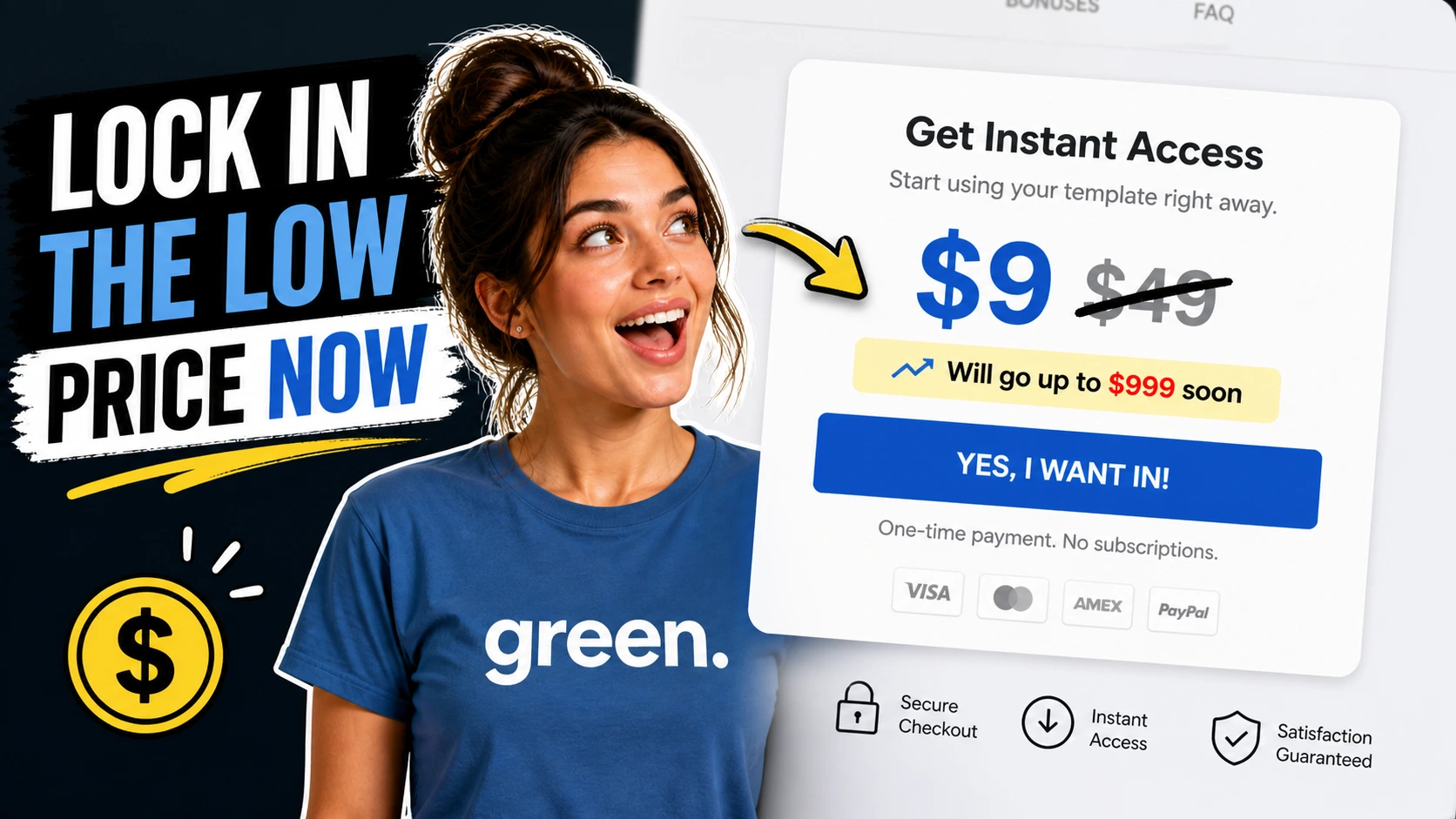
Your First Price Is Not Your Final Price
Pricing feels heavier than it should.
A small decision that carries too much meaning. What you charge seems to say something about you. About your confidence. About how you value your own work.
But the first price is just a starting point. Not a statement. Not a commitment.
It can change.
Why Low Prices Make Sense Early
A low price reduces friction.
Someone considering your template doesn’t have to think hard. A few dollars feels small. The risk is minimal. The decision is easy.
This matters more than you might expect. Especially when you’re unknown. When your template has no reviews. When nobody can vouch for whether it works.
Low price says: try it.
The goal right now isn’t profit. It’s your first user. Your first bit of feedback. Your first proof that someone wanted what you made.
Those things matter more than optimizing for revenue.
You can raise the price later. After reviews exist. After you’ve improved the template. After you understand who’s buying and why.
But early on, low price opens doors.
Simple Ranges to Start
For a single-page template, something like three to five dollars makes sense.
For a multi-page template with more depth, maybe seven to twelve dollars.
For a small system with connected parts, perhaps fifteen to twenty-five dollars.
These aren’t rules. Just starting points. Places to begin without overthinking.
Pick something in the range that feels slightly uncomfortable. Not so low it feels like giving away. Not so high you’d be embarrassed if someone complained.
That slight discomfort usually means you’re in the right zone.
Price Is Not Worth
Here’s something I had to learn the hard way.
The price of your template is not a measure of your worth as a person.
It feels that way sometimes. Charging five dollars can feel like saying I’m only worth five dollars. Which is absurd when you write it out. But the feeling is real.
I remember setting my first price. Staring at the field on Gumroad. The cursor blinking in that little box.
I typed ten, then deleted it. Typed seven. Deleted that too. Typed five.
Five felt safe. But also small. Like I was admitting something about myself.
I hit publish anyway. The click felt louder than it was.
A few days later someone bought it. Then someone else. The price didn’t define me. It just let people in.
Confidence Over Optimization
Some people spend weeks researching pricing strategies. Competitive analysis. Value ladders. Psychological pricing tactics.
This is mostly stalling.
For your first template, confidence matters more than optimization.
Pick a number. Commit to it for a while. See what happens.
If nobody buys, the problem probably isn’t the price. It’s likely the positioning or the audience or the template itself.
If people buy consistently, you can experiment with raising it.
The data comes from doing, not from planning.
Actually, I want to soften that. Some research is fine. Looking at similar templates helps you understand the range. But research becomes avoidance when it stretches past a few hours.
At some point you have to pick.
Raising Later Is Normal
Your first price is not permanent.
Templates can be repriced anytime. Most platforms make this trivial. Change a number, save, done.
Early buyers pay less. They took a chance on something unproven. That’s fair.
Later buyers pay more. The template has improved. It has reviews now. The risk is lower for them.
This isn’t bait and switch. It’s how pricing works over time.
I raised the price on my first template three months after launch. From five dollars to nine. It felt strange, like I was being greedy.
But the template was better by then. I’d fixed things based on feedback. Added clearer examples. Tightened the instructions.
The new price reflected the new version. Not greed. Just adjustment.
The Point Is Starting
Don’t let pricing stop you.
It’s a field to fill in. A number to choose. Not a philosophical statement about your identity.
Pick something reasonable. Publish the thing.
You’ll learn more from one real transaction than from weeks of theoretical pricing research.
The first sale teaches you something no amount of planning can. That someone you don’t know valued something you made enough to pay for it.
That feeling matters more than the amount.
The price can always change. But the lesson from that first sale stays.
